

If you spend enough time working in German Shepherd rescue, you start to notice some patterns. Different dogs, different families, different neighborhoods, but the same stories repeat themselves over and over again.
We’ve worked with hundreds of surrendered and rescued German Shepherds, and very few of them ended up in shelters because they were “bad dogs.” Most arrived confused, overstimulated, undertrained, or simply caught in circumstances their families couldn’t overcome. Almost every surrender we’ve handled has been preventable, and many were heartbreaking.
So why do German Shepherds end up in shelters? After years of running a German Shepherd rescue, one thing has become clear: in most cases, these dogs don’t fail their families they are simply misunderstood.
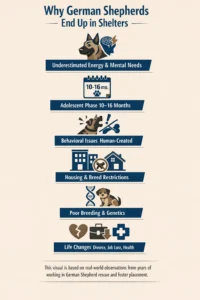
Common Reasons German Shepherds End Up in Shelters
We regularly see dogs surrendered between 8 and 18 months old, right when their physical strength and mental drive fully kick in. A perfect example was Koda, a 10-month-old black-and-tan male surrendered by Marcus from the Summerlin area of Las Vegas, who reached out to our German Shepherd rescue in Las Vegas looking for guidance and support. Marcus loved Koda deeply but admitted, “We didn’t realize how much exercise he needed, we walk him every day, but he’s still destroying the house.”
German Shepherds aren’t just energetic they’re working dogs. A walk around the block isn’t enough. Without mental stimulation, structure, and a job, boredom turns into chewing, digging, barking, and escape attempts.
One of the most common reasons German Shepherds end up in shelters is simply because most people actually underestimate what they’re bringing home. Below are the most common reasons we see German Shepherds surrendered to shelters and rescues, based on years of firsthand experience.
1. Behavioral Issues That Are Human-Created, Not Genetic
We’ve taken in countless German Shepherds who weren’t aggressive or disobedient. They were bored, frustrated, and confused, trying to burn energy in the only ways they knew how. Many dogs arrive labeled with “behavior problems,” but once they’re out of a shelter environment, those behaviors often disappear.
Luna, a 2-year-old sable female surrendered by Denise from North Las Vegas, was described as “reactive and anxious.” Within three weeks in foster care, Luna was calmly walking on leash and settling indoors. The issue wasn’t genetics it was lack of guidance and consistency.
Common behaviors we see include:
- Separation anxiety
- Leash reactivity
- Fear-based barking
- Overexcitement mistaken for aggression
Shelter environments amplify stress. A dog pacing or barking in a kennel is often labeled “problematic,” even though the behavior is a normal stress response. We often hear owners say, “He just changed.” In reality, adolescence arrived, structure didn’t increase, and expectations stayed unrealistic.
2. The Adolescent Phase Nobody Warns People About
This is where many German Shepherd adoptions quietly fall apart. The peak surrender age we see is 10 to 16 months right when puppies turn into teenagers. During this phase, dogs test boundaries, become more independent, and often regress in obedience.
Rex, a 14-month-old solid black male from Henderson, was surrendered by Emily, a first-time dog owner. She told us, “He was perfect as a puppy. Now he doesn’t listen.” What she didn’t realize is that adolescence is temporary and survivable with the right structure.
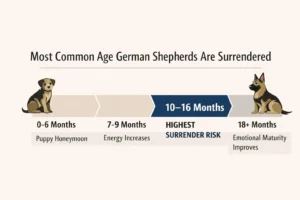
Some of the best dogs we’ve ever placed were surrendered just months before they would’ve matured into incredible companions. Unfortunately, many families never make it through this phase.
3. Housing Restrictions, Moving, and Breed Discrimination
Housing issues are one of the most painful surrender reasons because they’re rarely about the dog.
We’ve taken in German Shepherds surrendered by crying owners who had no other option. Breed restriction lists, insurance limitations, and sudden lease changes disproportionately impact Shepherd owners.
Tank, a 3-year-old tan male, was surrendered by Luis from an apartment complex near downtown Las Vegas after a new property management company banned German Shepherds. Luis spent weeks searching for alternatives before finally calling us.
In Nevada, limited rental availability, rising housing costs, and heat-related housing challenges make things even harder. German Shepherds are frequently singled out, regardless of temperament, and this breed discrimination has made German Shepherd rescue in Nevada especially challenging for families and dogs alike.
4. Backyard Breeding & Poor Genetics
German Shepherds are popular, and popularity attracts irresponsible breeding. We often meet families who purchased a puppy impulsively, unaware of genetic instability, health risks, or behavioral challenges tied to poor breeding practices.
Bella, a 1-year-old bi-color female surrendered from the Sunrise Manor area, came with severe anxiety and early hip issues. Her owners, Chris and Angela, loved her but weren’t prepared for long-term medical and behavioral support.
We’ve met many families who truly loved their dog but were never told what they were signing up for.
5. Life Changes That Force Impossible Decisions
Sometimes, love isn’t enough to overcome reality. Divorce, job loss, medical emergencies, financial strain, or the arrival of a new baby can turn daily care into an overwhelming burden.
Shadow, a 6-year-old gray male, was surrendered by Nicole after an unexpected medical diagnosis limited her mobility. She had raised Shadow from a puppy and sobbed through the entire intake process.
These decisions are rarely made lightly, compassion matters.
What We’ve Learned From Talking to Owners Who Surrendered
After years of conversations, certain truths stand out:
- Most owners didn’t want to surrender
- Many felt ashamed and judged
- Many tried training, daycare, or behaviorists without guidance
- Almost all underestimated the breed’s needs
Our job as a rescue isn’t to shame it’s to support, educate, and prevent future surrenders.
Why German Shepherds Do Better in Rescue Than Shelters
Rescue environments give German Shepherds what shelters often can’t: time, decompression, and individualized care. In foster homes, dogs can relax, routines form, and true personalities emerge. Training plans are customized. Matches are intentional.
A dog like Milo, a 2-year-old red sable male from Spring Valley, transformed completely once placed in foster care. What looked like anxiety in a kennel became confidence in a home.
Rescue doesn’t just save lives it rebuilds them.
How Understanding These Reasons Helps Reduce Surrenders
Education is the strongest surrender-prevention tool we have. Understanding the breed’s energy, adolescence, housing challenges, and mental needs helps families prepare instead of react. Working with experienced German Shepherd rescues creates realistic expectations and long-term success.
When people know better, dogs stay home.
Conclusion
We’ve spoken directly with owners standing in our intake parking lot in tears. Families are overwhelmed by the energy they weren’t prepared for. Renters who were forced to choose between housing and their dog. First-time owners who genuinely believed love alone would be enough.
German Shepherds don’t fail families, families fail to understand the breed. These dogs are intelligent, loyal, and resilient, but they require commitment, structure, and education. When we acknowledge the real reasons German Shepherds end up in shelters, we stop blaming dogs and start fixing systems.
It is important to know and note that rescue saves lives, but understanding prevents heartbreak.
Frequently Asked Questions
Why are German Shepherds one of the most surrendered breeds?
National data support what we see daily in rescue. According to the ASPCA, the common reasons dogs are surrendered to shelters are mostly because they are often misunderstood working dogs with high mental and physical needs.
Are rescue German Shepherds aggressive?
No. Most display stress behaviors that resolve with structure and decompression.
At what age are German Shepherds most commonly surrendered?
Between 10 and 16 months, during adolescence.
Can a surrendered German Shepherd still be a good family dog?
Absolutely. Many thrive once matched with the right environment.
Is surrender always the owner’s fault?
No. Life changes, housing restrictions, and lack of education play major roles.